
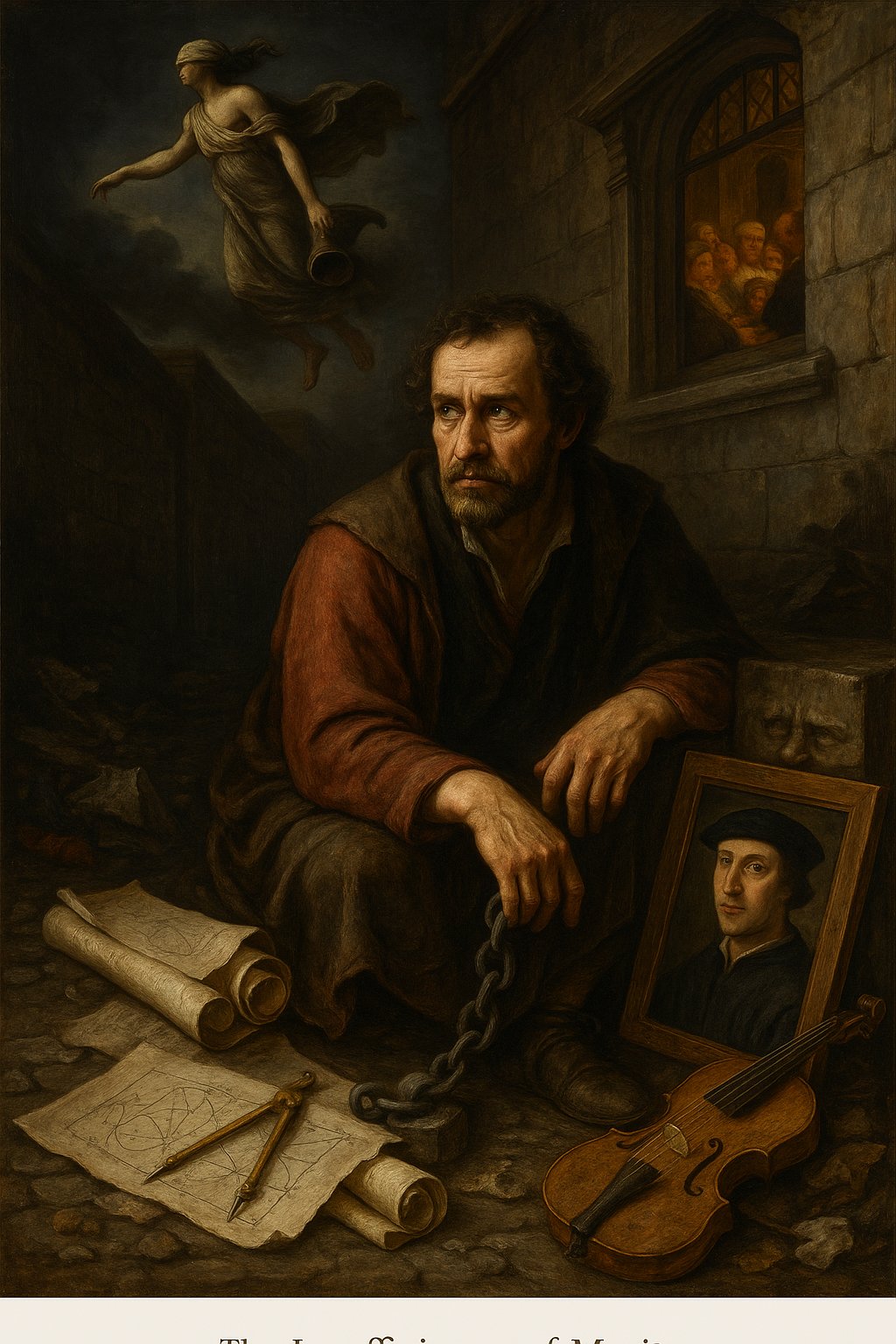
Why does the person who is best at something so often look like they’re barely trying? The dancer who seems to float, the speaker who makes a tough room go quiet, the friend who cooks for ten without breaking a sweat. You watch, and a small voice says: they were born for this.
That’s the paradox of effort. The better the performance, the less effort it seems to need, and the more effort it usually took. What you see is the finish. The cost was paid somewhere you weren’t looking.
Think of a restaurant. The plate arrives calm, with a sprig of something green and nothing out of place. Behind the kitchen door there is shouting, burned fingers and a dozen failed attempts at the sauce. The diner gets the calm because the kitchen absorbed the chaos. Skill works the same way. It moves the mess out of sight.
The same goes for anyone who seems to write easily. Ask a working writer about the first draft and you’ll hear about deleted pages, abandoned openings and the unglamorous Tuesday when nothing came. The ease a reader feels in one clean paragraph was manufactured by someone who said no to forty worse ones.
Research on expert performance, including Anders Ericsson’s well-known work with violinists in the early 1990s, keeps landing on a similar finding: the best performers log far more hours of focused, effortful practice than their equally ambitious peers. The sessions that build skill aren’t the fun ones. They’re the repetitive, slightly frustrating ones where a single bar gets played again and again until it stops falling apart.
It helps to remember that effort has a shape. At first it is loud: every step demands attention, and you notice every mistake. With repetition the loud parts go quiet, one by one, until whole stretches run without you thinking about them. That quiet is what spectators call talent.
Because we judge difficulty by what is visible, we misread our own experience. We try something new, it feels clumsy and hard, and we decide we aren’t cut out for it. The struggle gets treated as a verdict when it’s really the price of entry. The people we admire felt exactly that clumsiness. We just weren’t in the room.
Social media makes the distortion worse. It is built to show finished moments: the race photo, the launch announcement, the polished page of a drawing. Nobody posts the forty bad drafts. You end up comparing your messy middle with everyone else’s highlight reel, and the middle always loses.
Watch a child learn to ride a bike. The wobbling, the falls and the stubborn insistence on trying again look chaotic, yet nobody nearby concludes the kid lacks talent for cycling. We grant that grace to beginners at six and withhold it from ourselves at thirty-six.
The paradox runs in a second direction too. Some things that look hard from the outside, like starting a daily habit or having an honest conversation, turn out to be lighter than expected once you’re inside them. And some things that look effortless, like staying consistent for a whole year, are the hardest of all. The real effort is rarely where the drama is. It is in the repetition.
Effort alone doesn’t guarantee mastery, of course. Talent, coaching, timing and luck all matter, and pretending otherwise would be unfair to anyone who has worked hard and still fallen short. But effort is the part you control, and it’s the part nearly everyone underestimates.
There is also a cost side that’s easy to forget. Effort that looks effortless usually hides sacrifice: evenings not spent elsewhere, easier projects declined, comfort traded for repetition. When you envy someone’s result, ask whether you would also accept their schedule. Sometimes the answer is yes, and that’s useful to know. Sometimes it is no, and that tells you which admiration is real and which is only habit.
What this changes is how you read your own difficulty. When something feels hard, ask whether it feels hard because you’re bad at it or because you are early in it. From the inside, early and bad feel identical, yet they lead to very different decisions. One says quit. The other says keep going and expect the discomfort.
It also changes how you look at other people’s ease. The next time someone makes something look simple, try swapping the word natural for practiced. You’ll admire them more and envy them less, which is a better deal for both of you.
Hard doesn’t have to mean grim. Making effort visible to yourself helps: keep a simple tally of days practiced, hours put in, drafts finished. The ledger fills in what the highlight reel leaves out, and the numbers have a way of replacing “I’m not good at this” with “I have shown up eleven days in a row.”
If you want to put this to use, pick one thing you’ve been avoiding because it felt too hard to do well. Give it twenty minutes today, and go in expecting it to go badly. Bad is the point. A rough first twenty minutes is how every smooth performance you’ve ever admired began.
And when you do eventually make something look easy, let people see the work. Say how many tries it took. Telling the truth about effort is a quiet gift to every beginner who happens to be watching you.
The ease you admire is stored effort, paid out slowly. Start depositing.


Leave a Reply