
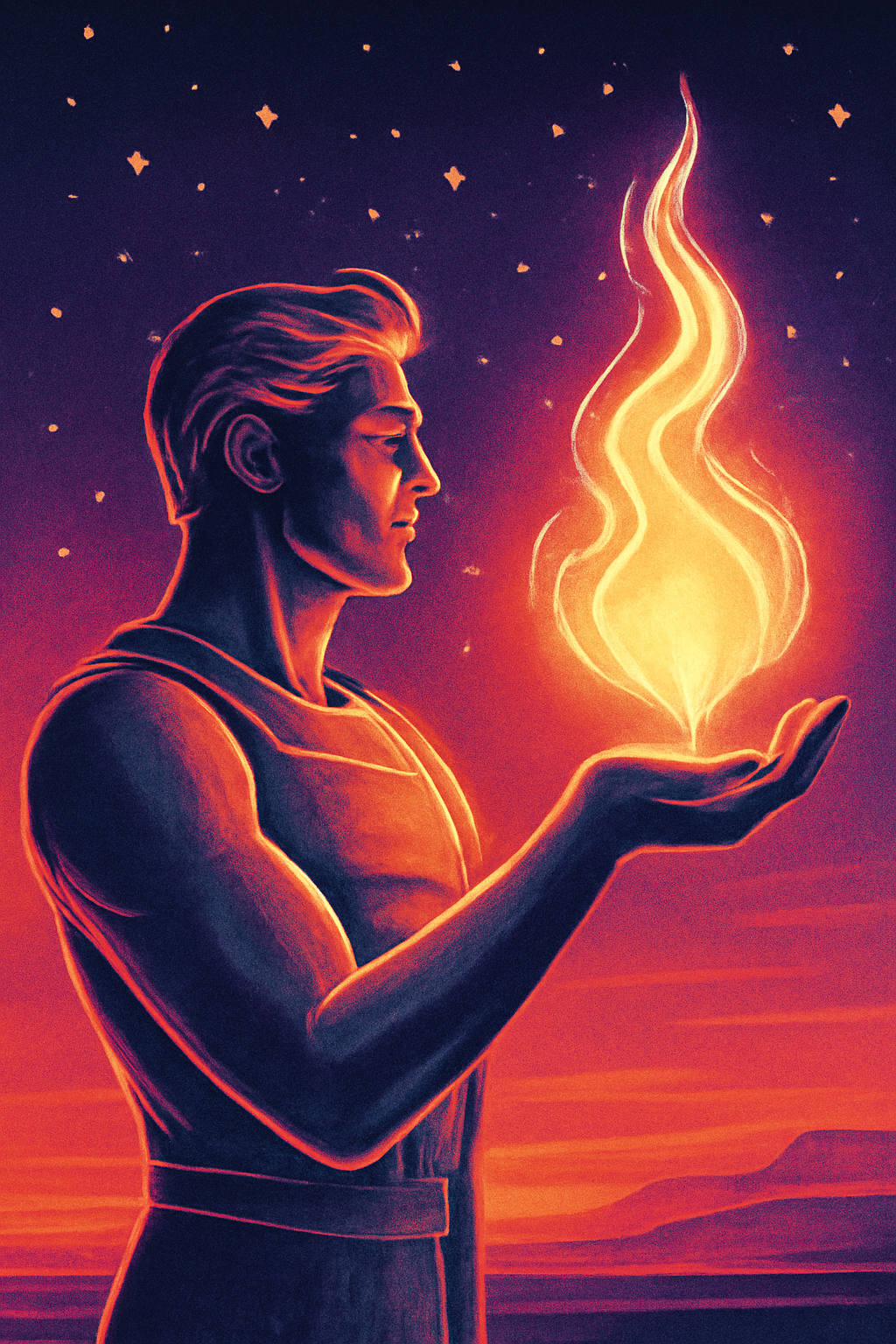
Courage doesn’t come with time. There is no amount of waiting that will make you feel ready to face what scares you. Often, we tell ourselves that we need to wait for the right moment, or that with more time, we’ll overcome our fear. However, true courage isn’t found in waiting, but in the act of confronting the unknown, the uncertain, the uncomfortable. In the end, it’s a leap, a conscious decision, not a buildup of moments of reflection.
From the Stoic perspective, for example, fear is something natural and shouldn’t be an obstacle to action. Philosophers like Seneca and Marcus Aurelius advocated that courage isn’t about eliminating fear, but acting despite it. Marcus Aurelius, in his Meditations, reminds us that true strength lies in doing the right thing, even when there is no certainty of success. It’s the bravery to act without waiting for fear to disappear first. If you keep waiting for the perfect moment to do something, it’s likely that fear will never go away, and the moment will pass. The Stoics teach us that the key is not to wait, but to do.
On the other hand, existentialists like Sartre offer another interesting perspective on courage. In his work Being and Nothingness, Sartre tells us that we are born without a pre-established purpose, and it is through our decisions that we shape ourselves. To live authentically, therefore, requires courage. It’s about making decisions that aren’t based on what others expect of us, nor what seems safer, but on what we truly want to do, even when there’s no guarantee of success. Sartre emphasizes that fear is an inevitable part of our freedom, but courage is found in the act of choosing, in leaping into the unknown.
From a psychological standpoint, we know that fear often leads to procrastination. Instead of acting, we wait for the right moment or convince ourselves that we need to be better prepared. However, studies like those by Daniel Kahneman show that, in reality, we underestimate our ability to face difficult situations. Rather than waiting, we should focus on what we can do now. Procrastination feeds fear, making it bigger, and distancing us from action. If we wait too long, fear doesn’t go away; it only grows. Acting, even imperfectly, is the best way to break that cycle.
Buddhism offers another valuable lesson: live in the present. The practice of mindfulness teaches us that life isn’t in the future, nor in waiting for the perfect moment, but in the here and now. Fear and anxiety stem, in part, from the illusion that we can control what will happen, from the expectation that the future will be safer. But life is in the present, in every decision we make. Living in the moment without fear of the future or regrets about the past is an act of courage. Fear doesn’t dissipate with time, but our ability to face it can grow if we learn to be present and act now.
Finally, courage can also be seen as a radical acceptance of uncertainty. Life doesn’t offer us guarantees, and the need for a predictable outcome can sometimes paralyze us. However, as Martha Nussbaum points out in The Fragility of Goodness, courage isn’t about waiting for everything to go right, but about doing what’s right despite not knowing what will happen. The fear of the unknown can make us wait, but true courage is acting, even without certainties.
In the end, courage is not found in waiting but in action. It’s the bravery to take the next step despite fear, to act without the promise of success, to live in the present without waiting to be completely ready. Time won’t give us courage; courage is in the decision to act, at the moment we choose to face our fears. We don’t need to wait to be ready. The perfect moment never comes. Courage is in what we do, not in what we wait for.

Deja un comentario